Your First Safari: Spend on the Guiding, Not Just the Lodge
Choose one landscape, allow enough nights and understand what a game drive actually involves.
Begin with a place, not a species checklist
The first safari is often planned as if wildlife were a collection of appointments. A lion at dawn, a leopard before lunch, something spectacular beside the sundowner. It is an understandable fantasy and an unhelpful contract with the natural world. Choose a landscape you are interested in, a camp whose guiding you trust and enough time to let the experience develop. Sightings are part of it, not a timetable anyone can honestly guarantee.
For a first trip, three or four nights in one well-chosen camp is a sensible starting point. It gives the early starts a rhythm and avoids repeatedly spending the middle of the day transferring. A second camp should add a genuinely different environment or experience, not merely a different bathroom. More stops do not automatically create a richer safari.
National park and private reserve are different purchases
A self-drive national-park visit and a guided stay in a private reserve differ in cost, independence and operating rules. Do not assume that activities advertised by one lodge are permitted everywhere. In Kruger, SANParks sets rules around roads, leaving vehicles and designated stopping places. A reserve's approach to night drives or off-road travel must be checked with that operator.
Neither model is inherently the more serious way to see wildlife. Self-driving can be rewarding for travellers who enjoy planning and observation. A good guided stay adds interpretation and lets you concentrate on the landscape rather than navigation. Ask what is included, how vehicles are shared and how the operator handles crowded sightings. The ethics of a drive matter as much as the equipment on it.
The guide changes what you see
A knowledgeable guide can make tracks, birds, plants and animal behaviour interesting before a large predator appears. That is the difference between a safari that depends on a trophy sighting and one that remains absorbing on a quieter drive. When comparing camps, ask about guiding qualifications, vehicle occupancy and whether your party is likely to keep the same guide during the stay.
A private vehicle can be worthwhile for a family with specific needs or photographers who want to linger. It is not automatically necessary for everyone. Discuss expectations in advance: some guests want long, patient observation; others struggle with several hours seated. The best arrangement is the one that makes the experience comfortable without pressuring the guide to turn wildlife into a performance.
Understand the daily rhythm
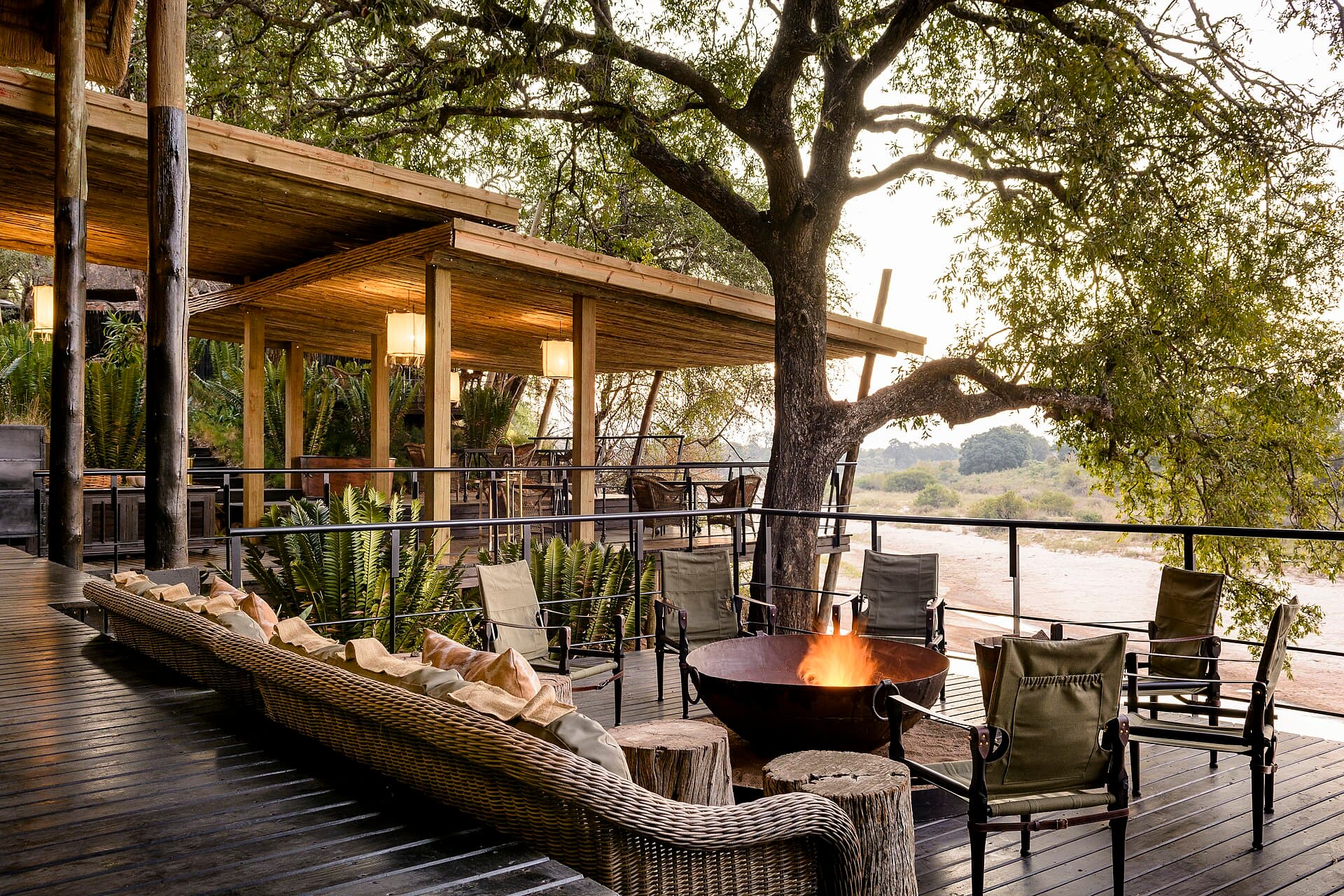
Expect early departures and a substantial interval between morning and later activities at many camps. Confirm the actual programme rather than assuming all lodges follow the same one. That middle part of the day is why a comfortable camp matters, but comfort need not mean excess. Shade, a good place to sit and the ability to rest can matter more than an elaborate suite feature.
Pack for changes in temperature and conditions, not just the afternoon forecast. Ask about luggage restrictions before a small-aircraft transfer. Families should confirm minimum ages for each activity: a child accepted at a lodge is not necessarily eligible for every drive or walk. SANParks' guided-drive rules, for example, include age restrictions; private operators may use different ones.
Keep the promises realistic
Arrange destination-specific health advice with a qualified travel clinician before departure, and follow the operator's safety instructions in camp and on drives. Do not use a hotel review as medical guidance or a reason to approach wildlife. Good safari planning is partly the willingness to accept rules whose purpose may not be immediately obvious to a first-time visitor.
The most useful luxury is time: time to watch an animal do something ordinary, to learn why a guide has stopped, to return to a place without requiring a better photograph. Spend accordingly. A lodge can make the setting comfortable, but it cannot purchase a particular encounter. The safari becomes more memorable when you stop asking the bush to fulfil a shopping list.
Some booking links are affiliate links. We may earn a commission, at no cost to you. It never affects our reviews.