Rajasthan by Road: Jaipur, Fort Barwara, Udaipur and Jodhpur
Four stops, one excellent driver and enough time to let the desert state reveal itself beyond the palace gates.
Rajasthan encourages bad itineraries. A map makes its great cities look tantalisingly close; a list of palaces makes every stop feel indispensable. The result is often a week of predawn departures, late arrivals and photographs of monuments that the traveller was too tired to understand. The better journey is slower: Jaipur, Fort Barwara, Udaipur and Jodhpur over eleven or twelve nights, with a car and driver throughout and no apology for spending an afternoon by the pool.
This route still contains splendour in unreasonable quantities, but it also makes room for the state beyond the postcard: vegetable markets waking before the forts, temple bells at dusk, village roads threaded with motorbikes and the particular blue-grey light that arrives over the Aravalli hills. Rajasthan is not a museum of former royalty. It is a densely lived-in place, and the finest trips hold both realities at once.
Begin in Jaipur, but do not race it
Give Jaipur three nights. The first is for recovering from the journey and learning the rhythm of the city; the second and third are for looking properly. Reach Amber Fort early, before the courtyards harden under the sun, then descend by car rather than turning the morning into an endurance test. The City Palace rewards more attention than the Hawa Mahal photo stop, while Jantar Mantar is most compelling with a guide who can make its stone instruments intelligible.
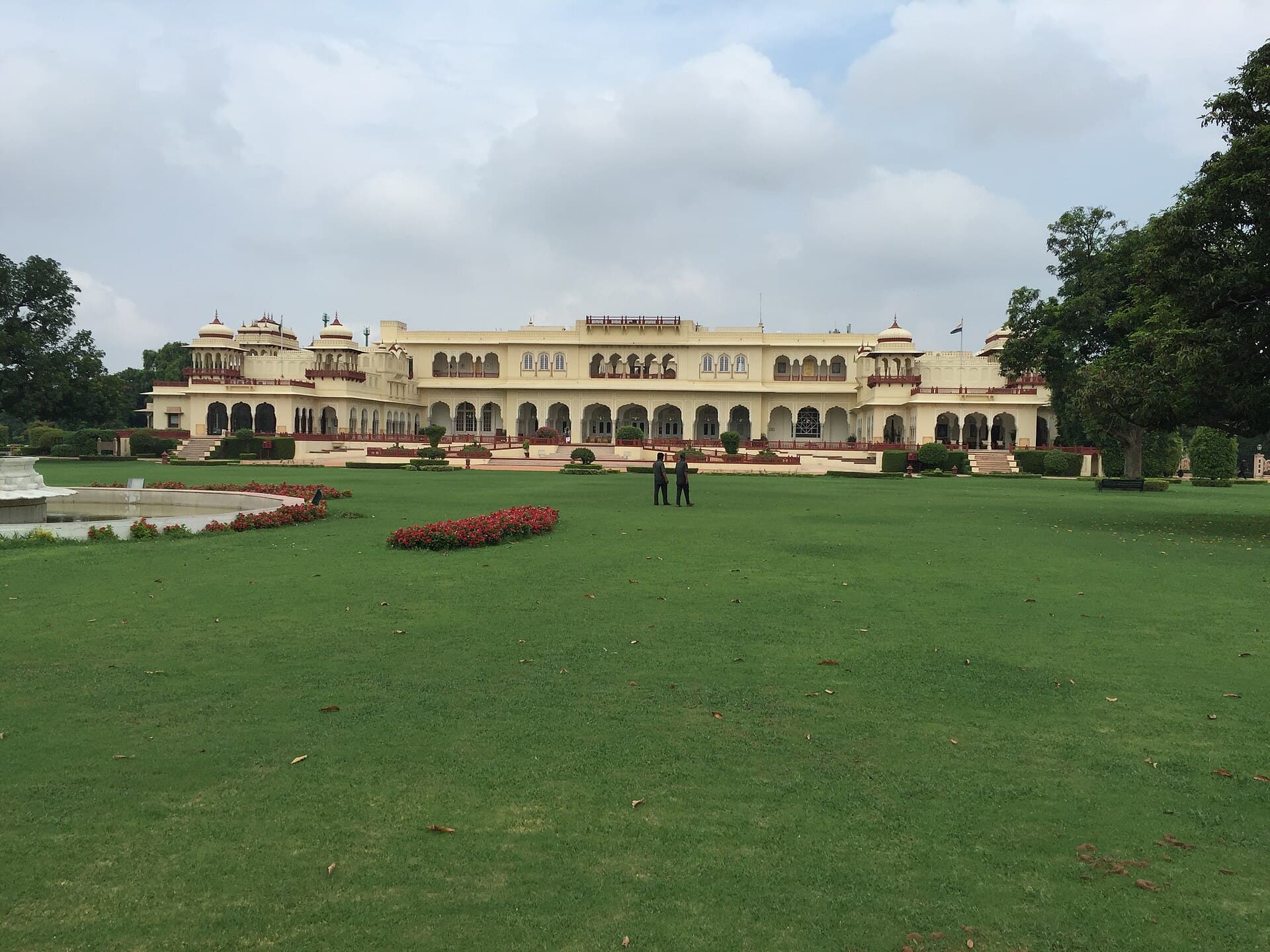
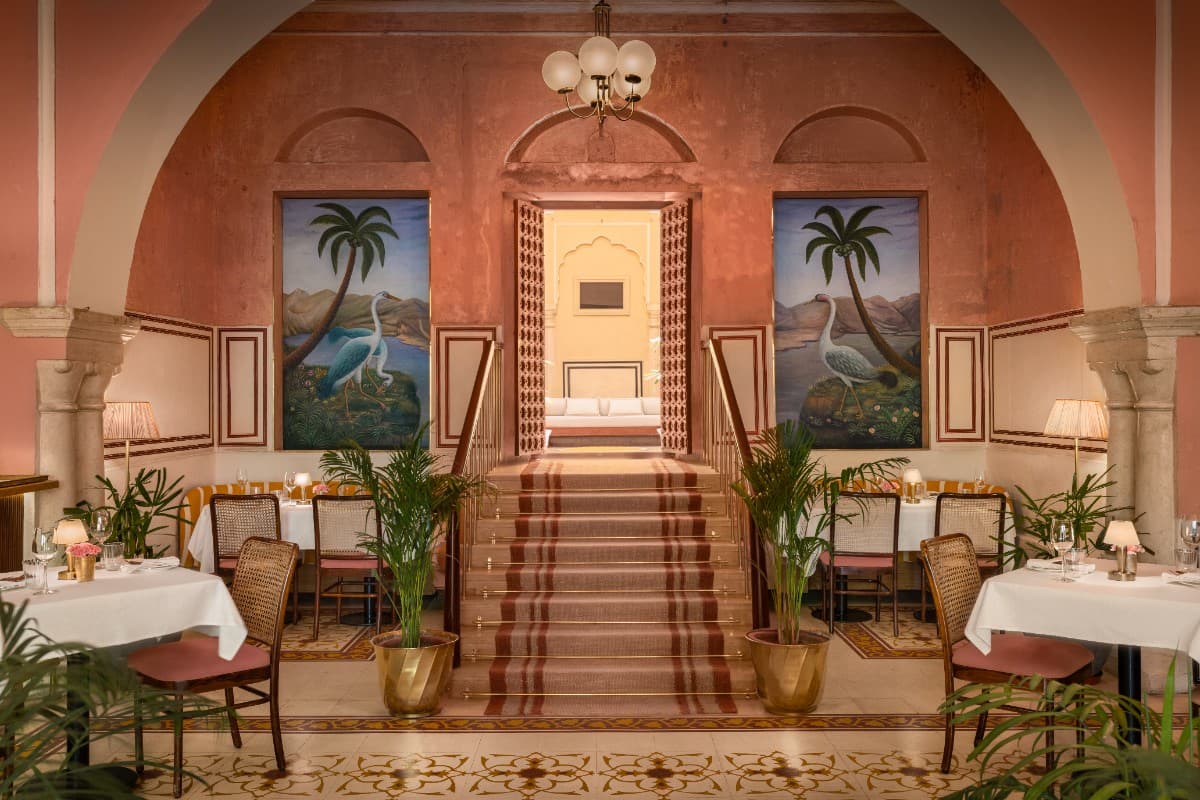
Leave one half-day unassigned. Jaipur's real texture lives between its monuments: jewellers working behind unpromising doors, block printers in Sanganer, old sweet shops and bazaars where wedding fabrics spill into the lane. A good local guide is invaluable, but ask for someone interested in craft and contemporary life rather than a procession of commission-paying emporia. Rambagh Palace remains the theatrical choice; book it for history and ceremony, not for urban intimacy.
The road to Fort Barwara
From Jaipur, turn southeast toward Chauth ka Barwara. The drive is part of the argument for travelling overland: city edges give way to mustard fields, small settlements and long, level horizons. Six Senses Fort Barwara occupies a restored 14th-century fort above the village, its two palaces and temples gathered inside walls that took a decade to bring back to life. Stay two nights at minimum; three if Ranthambore is part of the plan.
The fort is less about ticking off sights than changing tempo. Mornings can begin with the countryside from a rampart and end in a spa built around Indian systems of wellbeing. Ranthambore National Park is within reach, but a tiger sighting is never guaranteed and should not be treated as a hotel amenity. Go for the landscape, birdlife and the charged possibility of the forest. If wildlife is the trip's central purpose, add a dedicated lodge nearer the reserve rather than attempting a single rushed drive.
Udaipur: the lake is the itinerary
The transfer to Udaipur is the route's longest serious day. Break it with lunch, carry water and resist the temptation to add another city simply because it appears on the road. On arrival, the first glimpse of Lake Pichola explains why Udaipur has absorbed so much romantic projection. The water turns architecture into theatre: palaces seem to float, hills soften at dusk and every terrace points toward the sunset.
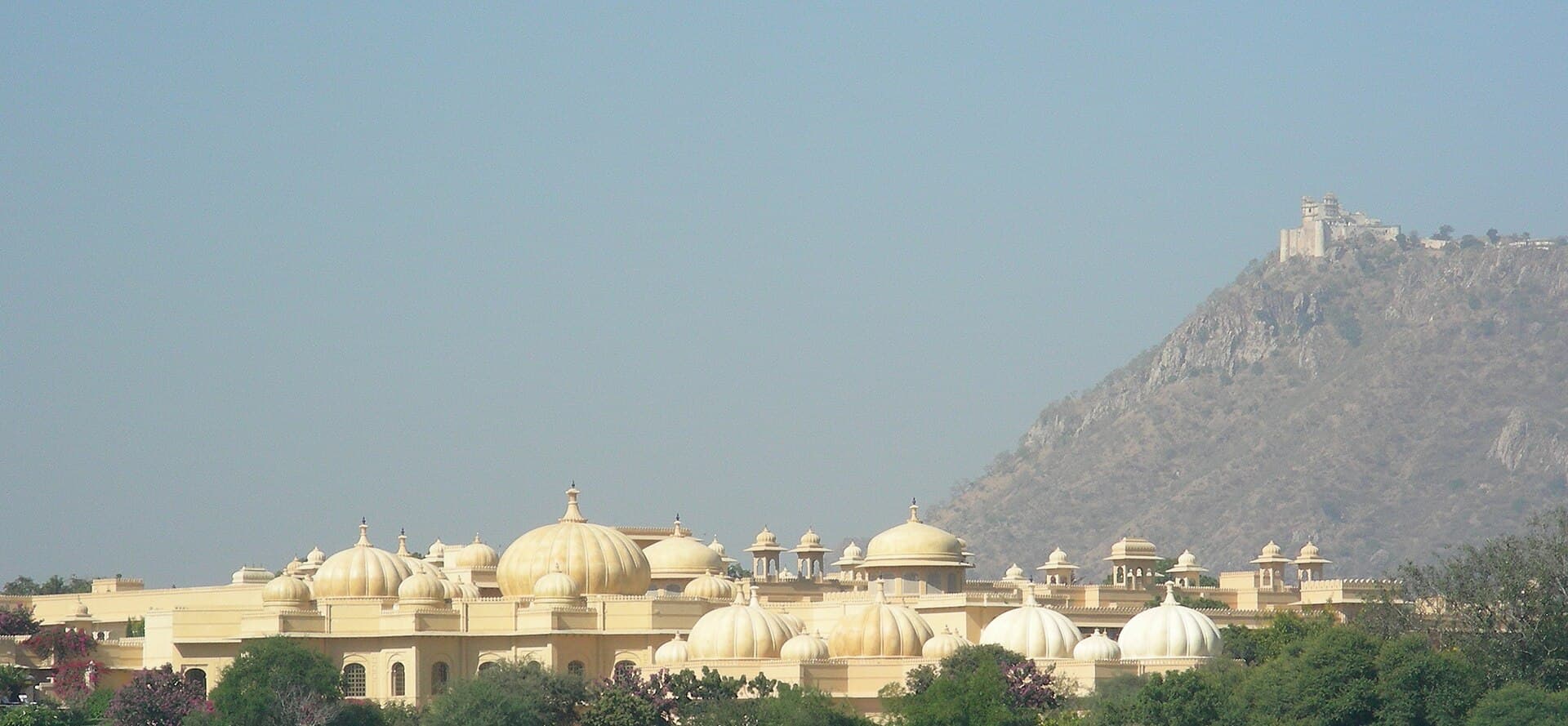
Three nights allows the city to become more than scenery. Visit the City Palace near opening, cross the lake by boat when the heat ebbs and walk the old-city lanes with patience for scooters, cows and sudden bottlenecks. The Oberoi Udaivilas offers space, gardens and a resort-like remove across the water; a smaller haveli in town offers immediacy. Neither is objectively correct. Decide whether you want Udaipur outside the door or composed as a view.
Finish in Jodhpur
Jodhpur is the strongest ending because Mehrangarh has the scale and severity to cut through palace fatigue. Rising directly from a rocky escarpment, the fort is magnificent not only for its ramparts but for the museum within: palanquins, miniature paintings, arms and rooms whose surfaces reward slow looking. Go in the morning, then return toward sunset for the old city's blue houses and the fort's changing silhouette.
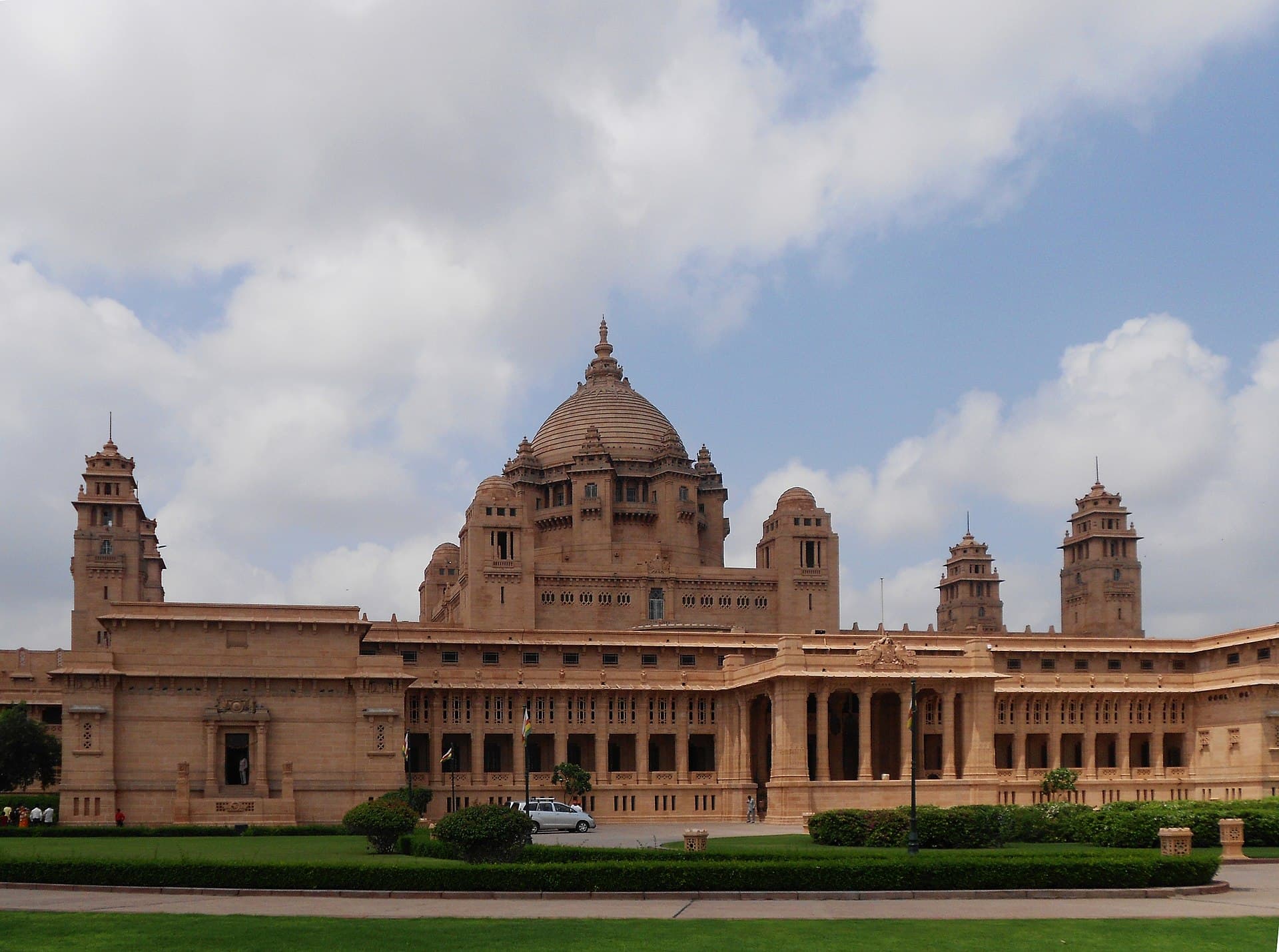
Stay two or three nights. Umaid Bhawan Palace is the grand finale—a still-functioning royal residence whose scale borders on surreal—while RAAS places you beneath Mehrangarh in the old quarter. Spend time around the clock tower market, eat beyond the hotel at least once and leave space for Bishnoi country if community-led visits can be arranged responsibly. The city is drier, tougher and less prettified than Udaipur; that contrast is precisely why it belongs.
The practical intelligence
A trusted car and driver is the essential luxury. Rajasthan's roads demand concentration, and self-driving saves neither time nor serenity. Confirm the vehicle, luggage capacity, daily hours, driver accommodation and expected gratuity before arrival. Flights can shorten the itinerary, but they also turn a journey into four unrelated city breaks. Use one only if time is genuinely tight.
October to March brings the kindest weather, with cold desert mornings in December and January. Pack layers, sun protection and shoes that tolerate dust and uneven stone. Avoid changing hotels for one-night stays. Schedule the great monuments early, protect the middle of the day, and do not assume that a high room rate makes every hotel meal essential. Some of the trip's most memorable food will arrive on a steel plate well beyond a palace dining room.
The route, distilled
Three nights Jaipur, two at Fort Barwara, three in Udaipur and three in Jodhpur makes an eleven-night journey with a humane pulse. Add one night wherever your flight schedule creates strain. The distances matter less than the texture of the roads and the unpredictability of traffic, so treat transfer days as travel days rather than empty space to be optimised.
Most importantly, allow Rajasthan to be contradictory. Its beauty is real; so are the crowds, inequality, noise and friction. The journey becomes richer when palaces are understood as part of a living social landscape rather than an exotic stage set. Travel with curiosity, tip fairly, ask before photographing people and buy craft from workshops able to explain who made it. The state gives extravagantly to travellers who arrive with time and attention.

Some booking links are affiliate links. We may earn a commission, at no cost to you. It never affects our reviews.