Where to Stay in Dubai: Choose the City Before the Hotel
Beach, old trading city or a hotel above the restaurants: the address that makes a Dubai trip work depends on what you came to do.
The question I ask before opening a hotel tab
Dubai rewards a very precise first decision. Do I want to wake up near the sea, step out to dinner in a walkable pocket, move between meetings, or spend most of the day inside a resort? The city is expansive enough that a seductive room photograph can become an expensive daily commute. I would choose the neighbourhood first and only then compare the hotels that serve it. A beach address is a poor bargain if every evening takes me back across town; an efficient downtown tower is equally wrong if the trip was meant to feel like a holiday.
There is no single Dubai mood. Old creekside streets, polished business districts, dense stretches of beach and engineered islands create different itineraries. The best booking is not the one with the longest amenities list. It is the one that leaves enough of the day intact to enjoy where I actually am. Before paying a premium, I put three real plans on a map and look at the journeys between them at the hours I would travel.
Downtown: the first-timer's spectacle
If I wanted Dubai's skyline, restaurants and a compact introduction to its newer centre, I would begin in Downtown. Burj Khalifa, Dubai Mall and Dubai Opera sit in the same broad district, making it possible to build a short visit around one base. The attraction is not only convenience: returning after dark, when the buildings become a lit-up stage, gives this part of the city its own theatre. For a two-night first trip, that immediacy can be worth more than a theoretical beach that requires a car to reach.
I would still check the hotel's exact entrance and walking route. Downtown's scale can turn an apparently neighbouring address into a longer outing than the map suggests, especially in heat. Ask which room categories genuinely face the view in the hotel's photographs; a skyline backdrop in the rooftop bar is not a promise about the bedroom. If I knew I wanted sea air every morning, I would not try to make Downtown act like a beach holiday.
DIFC: for galleries, late dinners and a working city
DIFC is the Dubai I would choose for a city break with a serious dinner list or for work that should still feel like travel. Galleries and restaurants give its compact core an evening life, and the district connects readily to other parts of the city. I like the idea of a hotel whose lobby is a pause between appointments, rather than the whole itinerary. The area can suit travellers who want the pleasures of a good urban address without committing to either a resort or a giant shopping complex.
The trade-off is visible from the room: this is a business and dining district, not a coastal retreat. A spectacular pool does not change the geography. I would compare the walking route to my most important meals, then check room size, street exposure and whether breakfast is included. On a short stay, a well-positioned hotel can save more time than an upgrade several kilometres away.
Jumeirah and Jumeira Bay: water with a little breathing room
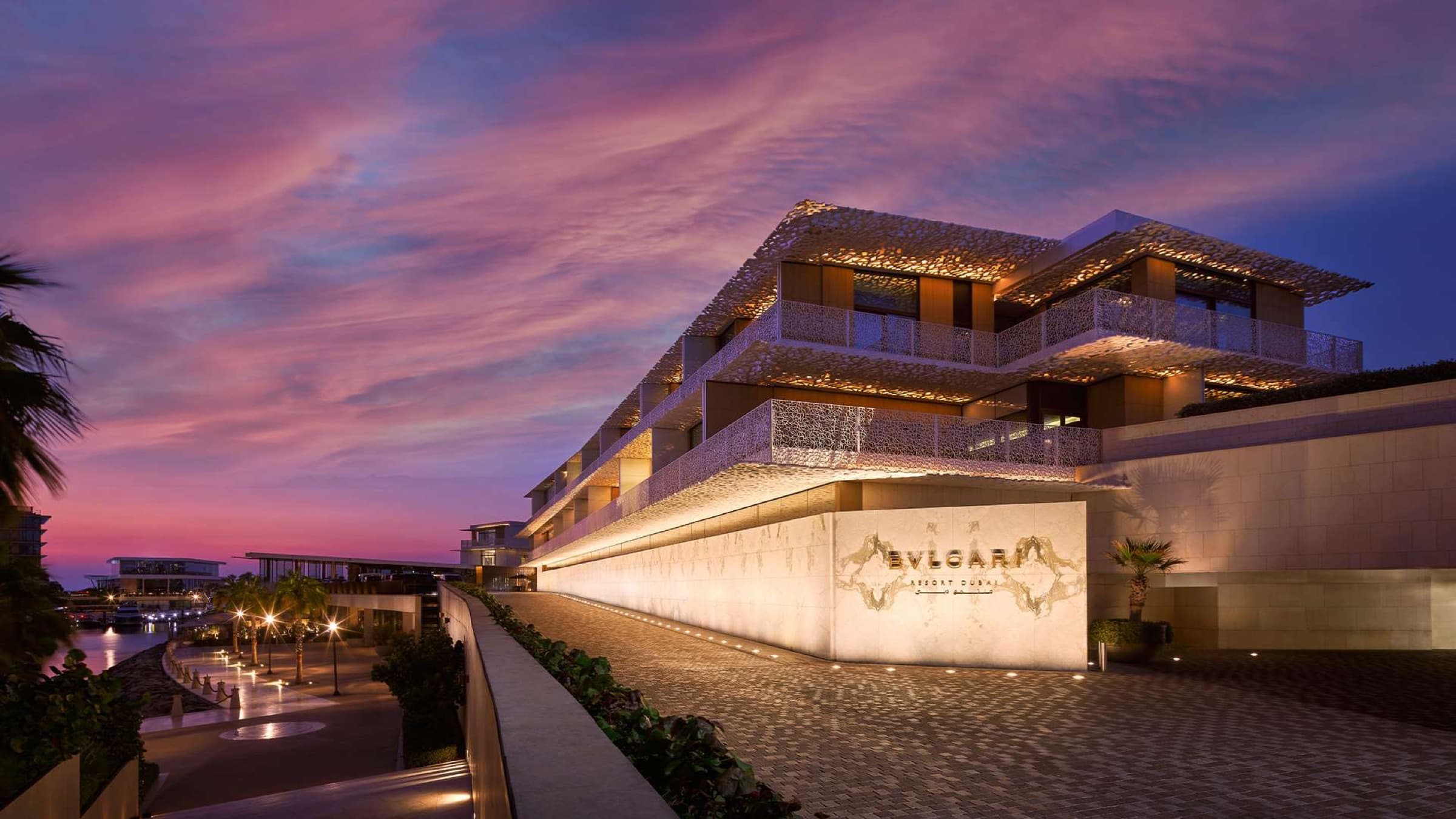
For a trip organised around the sea, I would look closely at Jumeirah and the nearby island addresses before choosing the Palm by reflex. The Bulgari Resort Dubai, on Jumeira Bay Island, makes a particularly strong case for a more private waterfront rhythm. It is the sort of hotel I would book with time to use its grounds and restaurants; otherwise the premium buys a setting I would barely see. Along the broader Jumeirah coastline, hotels vary enormously in scale and access, so the district name alone is not enough to choose one.
I would ask an unromantic question before booking: is the advertised beach private, shared, or a short drive away? Then I would look at the room outlook and the daily route to the places I plan to visit. A beachside base still usually means car journeys for cross-city dining or sightseeing. When the hotel itself is the holiday, that compromise is easy to accept. When every day is packed with appointments, I would choose differently.
The Palm, Marina and JBR: three different versions of the coast
The Palm works when I want a self-contained resort and am happy to let the hotel set the rhythm. It can be wonderful for families or a pool-and-beach trip, but I would not mistake a glamorous aerial photograph for a walkable neighbourhood. The Palm Monorail helps on its own route, while taxis or cars still matter for many journeys. I would check the exact position on the crescent or trunk and consider how often I expect to leave the property.
Dubai Marina and Jumeirah Beach Residence are more urban seaside choices. I would pick them when beach time needs to coexist with restaurants and a livelier promenade. They can feel busier and less removed than an island resort, which may be precisely the point. A high-floor marina view is not the same as direct beach access; a JBR address is not automatically a quiet one. Read the precise facilities and consider the traffic around arrival and dinner hours.
Creekside Dubai: history changes the pace
If I wanted the older trading city rather than a shoreline of resort entrances, I would spend time around the Creek, Deira and Bur Dubai. An abra crossing, markets and the smaller human scale of older streets give the day a different texture. This is a strong choice for a curious return visit or a short stay built around the city's history and food. It is less persuasive if the main purpose is a private beach and a suite with a skyline panorama.
I would choose a hotel here for its relationship to the neighbourhood, not because a low rate looks attractive beside a map pin. Check how you will reach the airport, the metro and any late-evening commitments. Dubai's parts are connected, but they are not interchangeable; the pleasure of the Creek is greatest when I can give it unhurried time rather than using it as a cheaper sleeping address for plans elsewhere.
The booking checks I would make
I compare the actual room category, not the most photogenic image in the hotel's gallery. View, balcony, beach access, breakfast and club privileges may each be sold separately. If I am considering the Palm or a large beachfront resort, I ask where my room sits in relation to the restaurants and pool. If I am considering Downtown or DIFC, I ask about the closest practical transport connection and the walking route in hot weather.
Dubai has a useful metro network, but it does not put every resort or attraction at the end of an easy walk; trams, the Palm Monorail, taxis and cars fill the gaps. For a two-night stay I would choose one good base. For a longer trip with two distinct intentions, I might divide the nights between city and coast. The point is to change the shape of the holiday, not merely change a key card.
Some booking links are affiliate links. We may earn a commission, at no cost to you. It never affects our reviews.