The New Luxury Is Being Left Alone
Not coldness, not neglect: the rare and sophisticated service of knowing exactly when to disappear.
Luxury hospitality has become very interested in friendship. Staff introduce themselves, explain their passions, ask what brings you here and sometimes sit down to take the order. A host messages before arrival, a butler appears after check-in and a 'curator' would like to know how the day made you feel. The intention is warmth. The result can be a holiday with the social obligations of a small wedding.
The most sophisticated service is not invisible; it is adjustable. It can be gracious and expansive when a guest seeks connection, then recede without injury when the answer is a book, a bath and no conversation at all. Being left alone is not the absence of hospitality. Done properly, it is hospitality's highest form.
The burden of being delighted
Hotels increasingly stage moments that require a response: petals spelling a message, desserts celebrating no occasion, tours of features the guest can plainly see. Each gesture asks the recipient to be appropriately moved. The traveller who wanted quiet now has a second job—reassuring the hotel that the hotel is doing wonderfully.
Surprise is valuable when it solves a need or expresses genuine knowledge. It becomes theatre when deployed by checklist. A pot of the tea someone ordered yesterday is personal. A bath full of flowers that prevents anyone from using the bath is content production.
Privacy is an operational skill
Real privacy begins with architecture—soundproofing, sightlines, entrances and outdoor spaces that do not face another villa—but it depends equally on operations. Housekeeping should not knock three times a day to offer services already declined. Pool staff should see an empty glass without opening a conversation. Technology should communicate preference, not produce more notifications.
A 'do not disturb' sign must be treated as an instruction, not the opening move in a negotiation about turndown. The great hotel makes every service easy to summon and equally easy to refuse.
Personalisation without surveillance
There is a line between remembering and monitoring. Knowing a returning guest prefers still water feels hospitable. Mentioning a detail extracted from social media feels invasive. As hotels collect more data, the temptation is to display knowledge as proof of care; restraint becomes as important as accuracy.
The useful preferences are practical and volunteered: allergies, pillow firmness, communication channel, housekeeping time. The rest belongs to the guest. Personalisation should remove repetition, not reveal the size of a profile assembled backstage.
Quiet has become a travel motive
Recent travel research from major hotel and booking companies points toward rest, solo time and lower-stimulation stays as explicit desires. The trend has acquired the ungainly name 'hushpitality', but the impulse is older: cities are loud, work is porous and many travellers are paying not to be entertained.
Hotels respond by marketing silent breakfasts and phone-free spaces, then undermine them with pool DJs and constant programming. Quiet cannot be scheduled at eleven-thirty by the spa. It must survive the lift, corridor, restaurant and room.
Service that can read the room
The ideal staff member offers one clear opening and notices the response. A short answer, headphones or eyes returning to a page are not discourtesy; they are information. Training should value this perception as highly as name use and product knowledge.
This does not mean a return to icy formality. Warmth can exist in a sentence. Care can be expressed by placing water within reach, fixing a problem without narrating the fix and remembering not to ask the same question twice. The guest should feel held, not handled.
The luxury of no
The best hotels give guests permission to decline. No turndown, no tour, no welcome ritual, no need to explain dinner plans. They understand that an empty itinerary is not a service gap waiting to be filled.
Hospitality is often defined as making someone feel at home, but home is the place where silence requires no justification. The new luxury is a hotel attentive enough to know you are there and secure enough not to keep proving it.
Hotels Worth a Look
 Urban Sanctuary
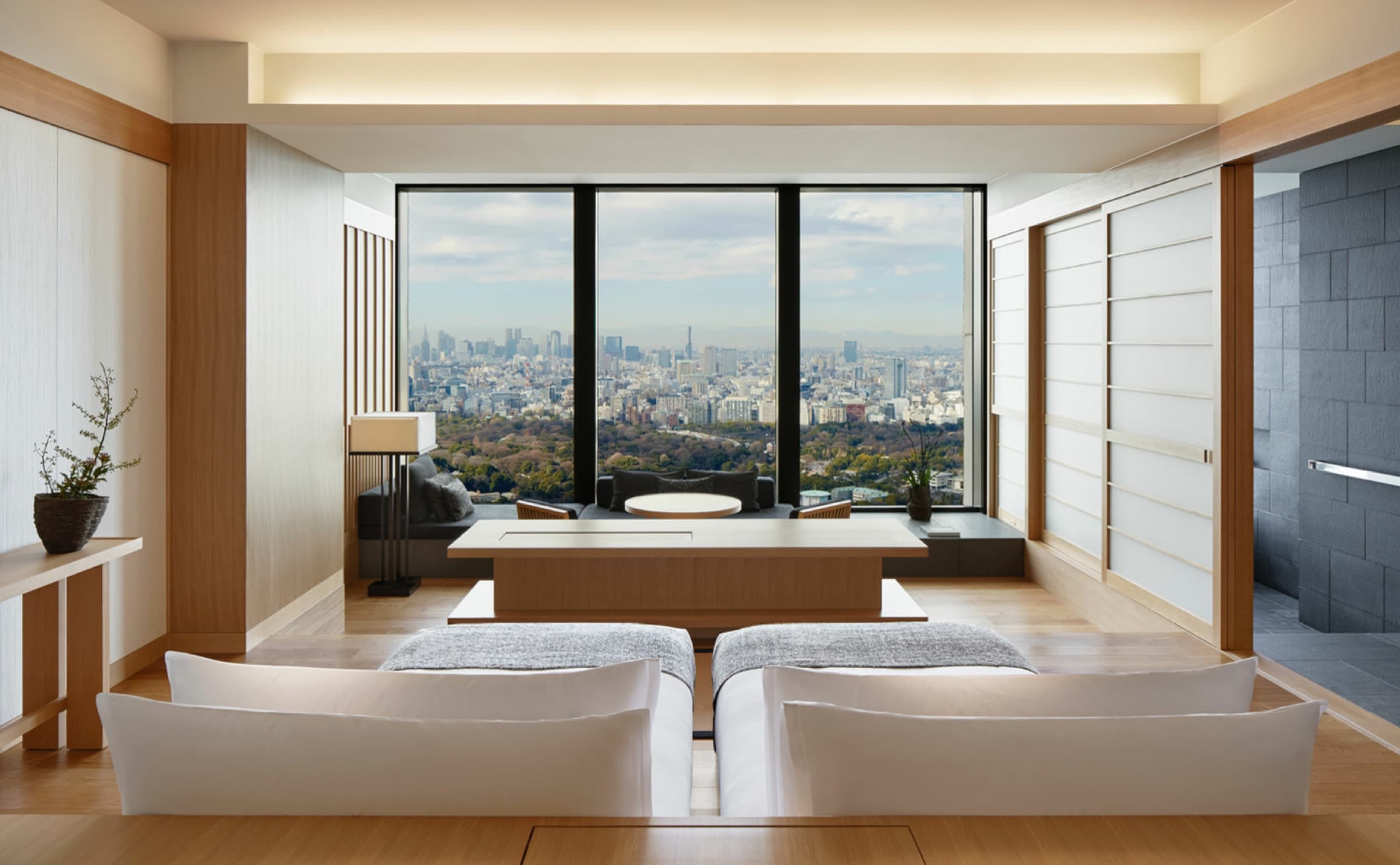
Aman Tokyo
Thirty-three floors above Otemachi, Aman took the top of a corporate tower and made it the calmest room in Tokyo. It works because of everything it leaves out.
Indicative from $1,150 / night
 Private Atoll
The Brando
The Brando pairs extraordinary seclusion with solar power, seawater air-conditioning and conservation work on Tetiaroa. The all-inclusive rate is vast; so is the sense of privilege.
Indicative from $4,200 / night
 Restored Fort
Six Senses Fort Barwara
Fort Barwara succeeds because the restoration retains weight and imperfection. Forty-eight suites, temple bells and a serious spa make this far more than a palace-shaped stopover to Ranthambore.
Indicative from $900 / night