Why Every Luxury Hotel Now Looks the Same
Bouclé, travertine, fluted timber, one enormous olive tree: the global good-taste machine has made hotels beautiful, expensive and strangely placeless.
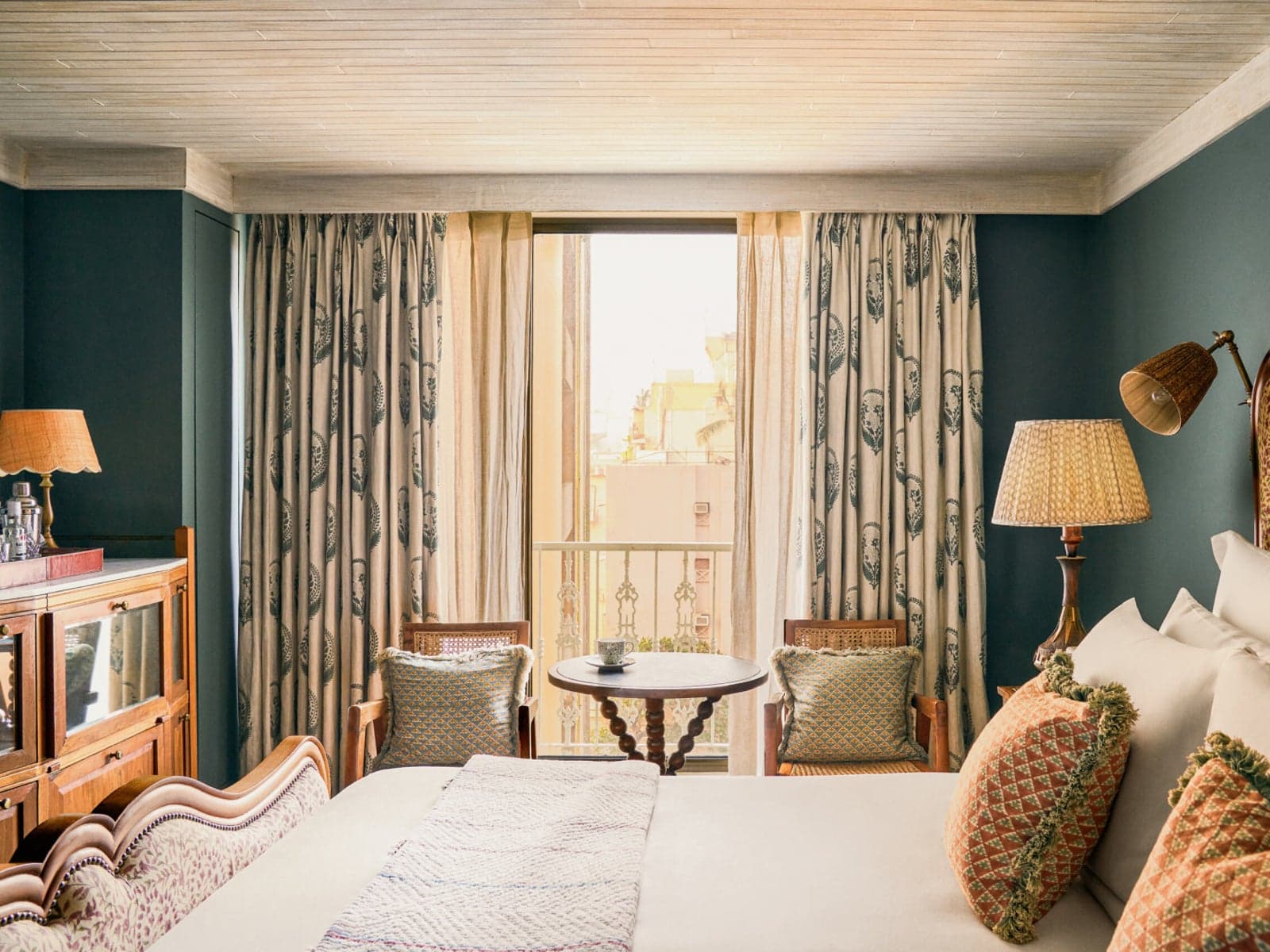
You know the lobby before the taxi door opens. There will be limestone in a warm, difficult-to-name shade; rounded sofas upholstered in bouclé; fluted oak; black-framed glass; an olive tree older than the building; and a fragrance that suggests cedar without committing to a forest. The bar playlist will sound expensive and impossible to remember.
This is the international language of contemporary luxury, perfected by algorithms, procurement catalogues and a thousand saved images. It is handsome. It is calming. It has also made hotels in Lisbon, Los Angeles and Singapore look as though the same tasteful person moved house three times and forgot to unpack.
How good taste became a supply chain
Hotel design operates under brutal practical demands. Materials must survive luggage, cleaning chemicals and guests who treat furniture as gym equipment. Global brands need reliable suppliers, investors need recognisable value and renderings need to secure approval before a single local craftsperson is hired. Standardisation is not simply creative laziness; it is risk management.
Social media then compresses the field further. A photogenic arch or sculptural staircase travels farther than a subtle plan, so the elements that perform well are repeated. Inspiration becomes reference, reference becomes brief and the brief arrives in another country with the location filed off.
The beige alibi
Neutrality is presented as timelessness. Sometimes it is. Often it is a refusal to take responsibility for taste. Beige offends nobody in the investment meeting and asks little of a guest scrolling past the room. It also photographs consistently under imperfect light.
The problem is not the colour itself. Monastic rooms, desert buildings and Japanese interiors prove how expressive restraint can be. The problem is neutrality without an idea: expensive surfaces arranged to communicate calm, with no relationship to climate, history or the life beyond reception.
Local craft, applied as garnish
Faced with charges of placelessness, hotels add a woven panel, commission ceramic vessels and name the restaurant after a regional plant. Craft becomes the design equivalent of a herb placed on top of a finished dish. The work may be beautiful, but it cannot carry an interior conceived elsewhere.
Real locality is structural. It appears in how a building admits shade, where people gather, which materials age well and what a room assumes about privacy. It involves artisans early enough to shape the project rather than decorate the deadline.
Hotels that could not be anywhere else
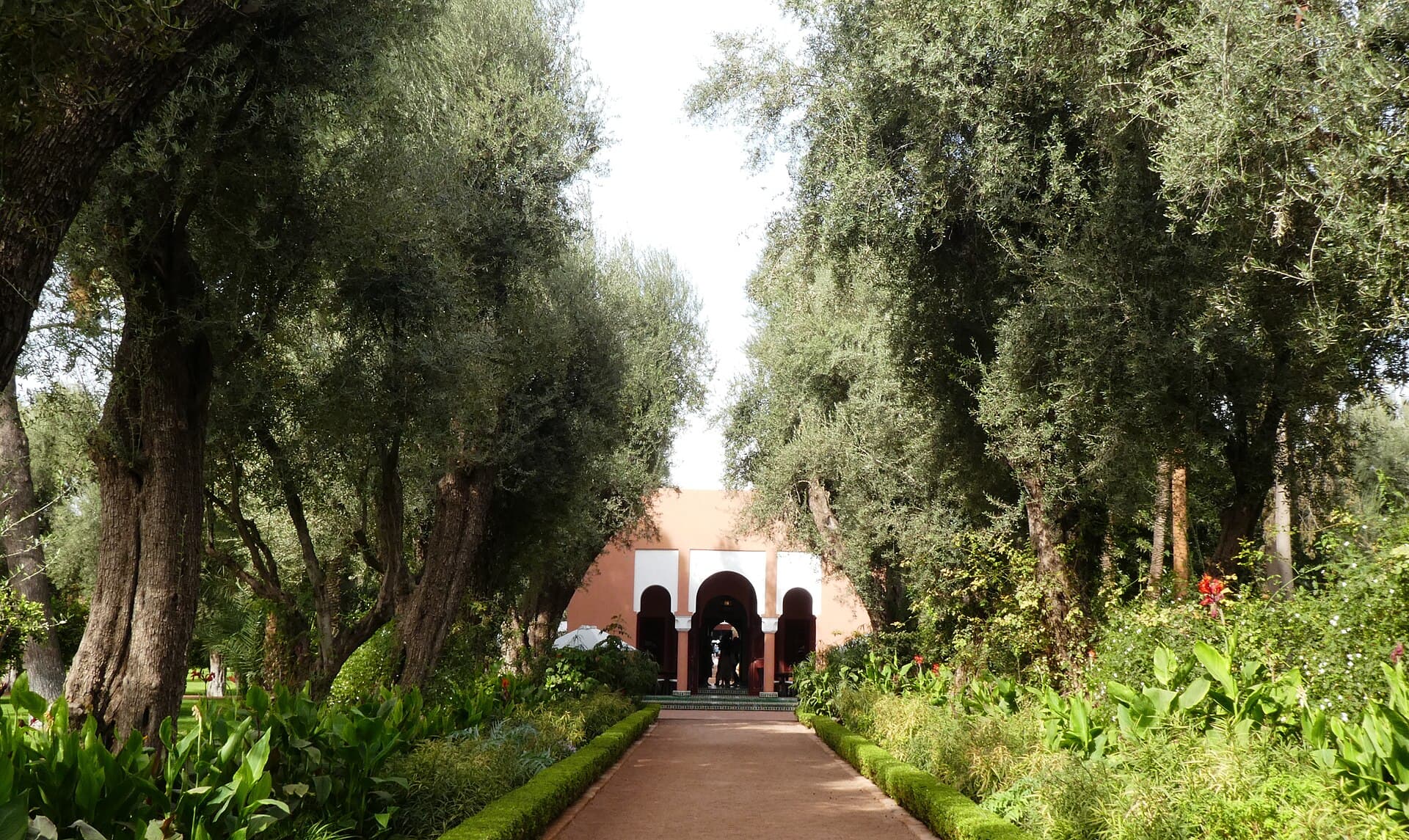
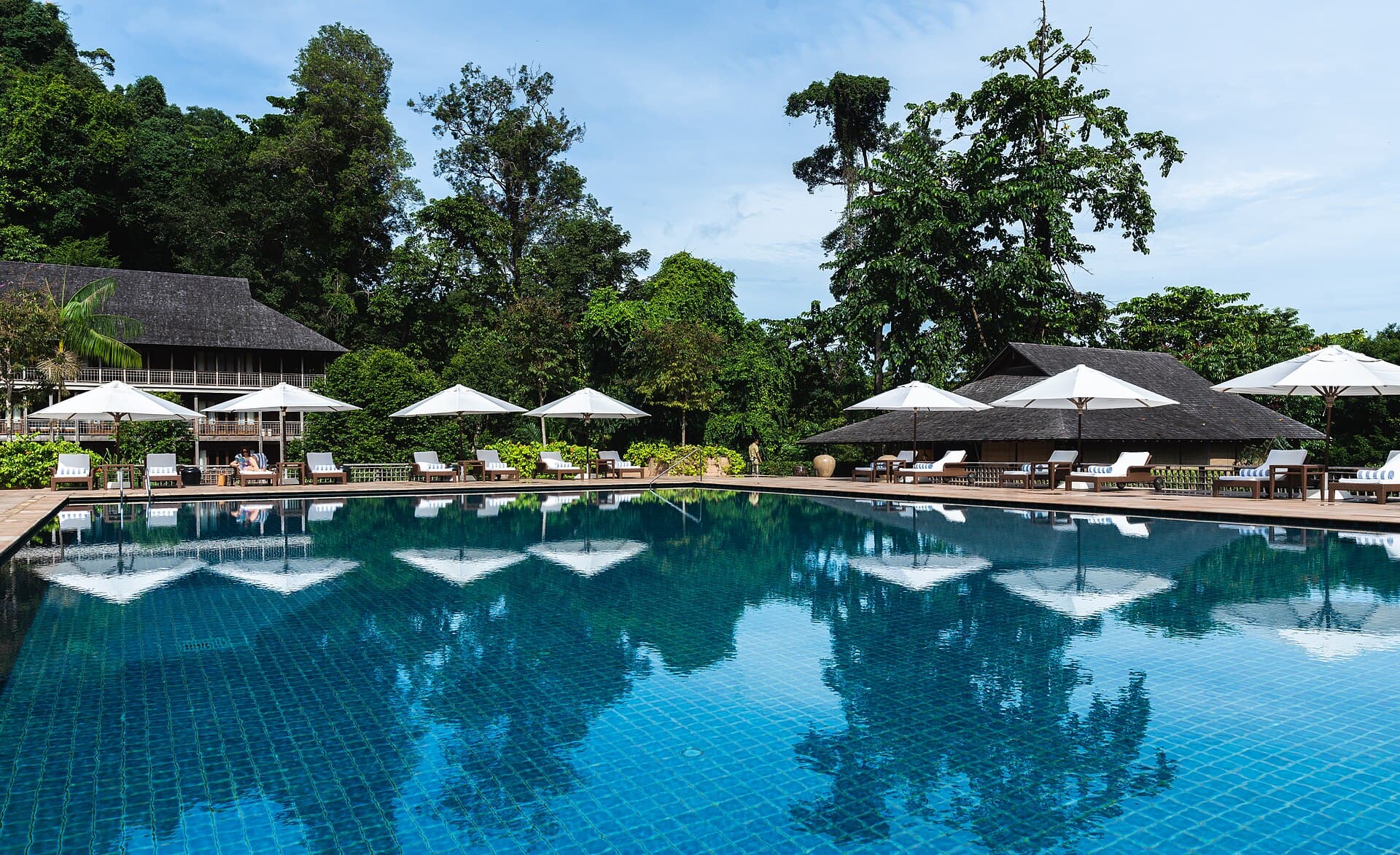
The memorable counterexamples do not all shout. Geoffrey Bawa's Sri Lankan hotels feel inseparable from monsoon, garden and ruin. La Mamounia's procession of tile, plaster, cedar and courtyard belongs to Marrakech even after repeated restorations. The Datai disappears into Langkawi's rainforest because its architecture begins with the site rather than the object.
Rosewood São Paulo takes a different route, filling a historic maternity complex and new tower with Brazilian art, colour and layered public life. Claridge's remains itself because generations have added to it without sanding away the eccentricity. Distinctiveness is not one visual style; it is the presence of conviction.
The cost of photogenic perfection
Rooms designed as images often fail as rooms. The chair looks exquisite but cannot support a working back. The basin has no place for a wash bag. Lighting creates a flattering dusk everywhere except the mirror where someone attempts to shave. A hotel is architecture tested by wet towels and jet lag.
The uniform visual language hides these failures because we recognise its codes as expensive. Travertine tells us to expect luxury before the shower pressure or soundproofing has offered evidence. Design should earn trust through use, not merely trigger it through materials.
What should replace the template
Not themed interiors, historical pastiche or rooms burdened with every regional motif. The answer is research: into climate, domestic habits, art, landscape, urban form and the people who will operate the building. A contemporary hotel can be international in comfort and deeply particular in character.
Designers also need clients willing to accept that character divides opinion. The room everybody 'likes' in a presentation is rarely the room anyone remembers five years later. Hotels become beloved through specificity, and specificity always risks somebody disliking the wallpaper.
A plea for the strange chair
Keep the chair that makes sense only in this lobby. Hang art that has not been selected to match the cushions. Let old buildings retain a difficult corner and new ones admit the weather. Use colour without calling it a pop. Make the minibar look like it belongs to the city.
Travellers do not cross oceans to inhabit the global mood board. The best hotel room should provide comfort, certainly, but also evidence: of where we are, who made it and why it could not have happened anywhere else.
Hotels Worth a Look
Rosewood São Paulo
Rosewood turns a former maternity complex near Paulista Avenue into São Paulo's most layered hotel. The 180 rooms, six bars and restaurants, chapel and art collection create a destination with real local voltage.
Indicative from $650 / night
 Palace Hotel
La Mamounia
Behind the ramparts of the medina sits a 200-year-old garden and a hotel that has hosted everyone from Winston Churchill to the entire fashion set.
Indicative from $750 / night
 Rainforest Resort
The Datai Langkawi
On Langkawi's north-west tip, The Datai sits inside one of the oldest rainforests on earth, where hornbills and dusky langurs share the trees and the Andaman Sea laps a perfect beach.
Indicative from $700 / night